So my therapist has been helping me get to grips with my ADHD, and also the concept that I’m not shit at being an adult, I just can’t do things the way everyone has always told me to do them. Like every single “organize your life” books have always left me wanting to cry with frustration, and after I got hold of a copy of Organizing Solutions for People with ADHD
by Susan Pinsky I realized that was because they primarily focus on “aesthetic” over “function”. And the function of most standard “organize your life books” is to “make things look Show Home Perfect”.
So the standard “hide all your unsightly things by doing xyz” may look nice for the first week or so, but by the end of the week it’ll look like a tornado made of pure inhuman frustration ripped through the house as I try to find the fucking advil.
To give you an example of the kind of hell I’ve been fumbling my way through the last 20 odd years: dishes will be washed and left in the drying wrack but never put away. Which means I can’t wash more dishes, which means dishes pile up, which means I can’t make food, which means I don’t eat, which means my CFS gets worse, which means I don’t have the energy to put the dishes away, and so on so forth until I have a meltdown, cry to ETD (who also likely has ADHD but has never had it confirmed) about how I can’t cope with life, and then we fix it for a while, but inevitably end up back at square one within about a week.
Pinsky’s solution to this was “remove an obstacle between you and your goal, if that means taking all the doors off your kitchen cabinets to make things easier, so be it.”
And lemme tell you, fucking revolutionary.
Laundry never ends up in the hamper??? why???? is it a closed hamper??? Remove the lid. Throw it out the window. Clothes are now miraculously finding their way into the hamper??? Rejoice????
Mail ends up spread out over every available flat surface? Put a sorting station right where your mail arrives. Put a shredder or “junk” basket under it. Shred or dump the junk immediately. Realize you only actually have two real letters that need attention, feel less overwhelmed, pay your bills on time.
Like I’m not saying this book is miraculous, but it did help me realize that I was effectively torturing myself by trying to conform to certain ideals of “perfect house keeping”, and presenting a certain image rather than just allowing myself to live in my space as effectively as possible. And why? Why was I doing that? Cause people with different lives and capabilities are perceived as the norm? Fuck that. If this was a physical problem I wouldn’t be forcing myself to conform to an ableist standard, so why am I doing it with this?
My lived space will never look a certain way, and that’s okay. It will never look show home perfect, and that’s okay. It will likely always be cluttered and eclectic where nothing matches, and that’s okay. Sometimes I will have odd socks on because sorting them out required too much mental energy, and that’s okay. Actually fuck sorting socks, just buy all your socks in the same color. Problem solved. Boring sure, but also one less thing to do, which means more time to hyper fixate on fun things. Which really, what else is my life for if not to write screeds and screeds of vampire shit posts, I ask you.
there is a healthy, “natural” way to monitor your body and it’s called interoception. it’s feeling what you’re feeling; it’s awareness of fatigue, hunger, physical discomfort, the way emotions manifest physically, other needs/desires.
technology like scales & step counters, and constructs like BMI designations & clothing sizes are means by which we are alienated from our bodies.
we are first stripped of our interoceptive awareness (esp as women) by a culture that forces us into discomfort and pain in almost every area of our lives, and then we are sold devices and labels – external surveillance – as counterfeit substitutes for that healthy interoceptive relationship with our bodies
when i say let’s refuse to surveil our bodies, i’m not suggesting we become alienated from them, i’m saying exactly the opposite
When you pick up a sword for the first time you will be slow and awkward. This is frustrating, but refuse the temptation to try and become a “faster” fencer. Chasing after speed is like trying to catch smoke. If you try and pursue speed, all you will accomplish is haste. Haste is the enemy of 1st class fencing.
Speed is a lie the untrained mind tells itself when it sees an action it cannot follow. The truth is a combination of timing, control, and fluidity. Fluid motion, even done slowly, will always arrive before a hasty strike. Control will allow you to move without wasteful motion that will slow you down. Timing will eliminate the need to move fast almost entirely. There is no need to get somewhere fast so long as you get there at the right time.
Slow is steady, steady is smooth, smooth is fast.
My old fencing coach used to say exactly that, word for word.
It’s Monday afternoon. I have two papers and a programming assignment due Wednesday, and an exam on Friday, not to mention two homework assignments I haven’t started on. But I’m sitting in a cafe with my earbuds in, listening to The Moth Radio podcast while I drink my cup of Cafe Au Lait and occasionally bite into my vanilla macaron. I’ve been sitting here for nearly 45 minutes and I don’t plan to start working again until another 15 minutes.
What am I doing? Shouldn’t I be working right now? Why am I wasting my time? Well, I’m taking one of my mandatory midday coffee breaks.
Why take a midday break?
You probably think you’re too busy to take breaks. You think there are way too many things on your to-do list that you can’t afford to lose even five minutes of time away from doing them.
This is how I used to see things, too. Even though I’ve been using the pomodoro method for a relatively long time, I discovered that I needed something more, especially since my daily college schedule very much tempts me into studying for long stretches of time. I used to think that whenever I didn’t have class, I had to study, but that was just harmful to my overall productivity.
These mandatory coffee breaks serve as a sort of mental reset, a time to wind down just a little bit so I can get back up refreshed and ready to tackle on more tasks. They help me stay sane and not feel stressed and overwhelmed by all the things I have to do, and they also help me restore focus so that I can achieve full concentration on my tasks after the break.
Sometimes we don’t realize how draining all the chaos of studying and working can be until we stop doing those things, so taking these breaks can definitely help you recenter yourself.
I’m sure you can see how these breaks are helpful, but how exactly do I take these breaks?
When?
I take my coffee breaks during the time of day when I would feel sluggish and slow, from 3:30 to 4:30 pm. This is of course different for everyone, but regardless of the exact time, if I chose instead to work during my slow hours, I wouldn’t get much done, and I’ll only end up feeling too tired to do much else the rest of the day.
Where?
As much as I can, I’d go someplace where I don’t normally study so I can get the entire ‘busy mindset’ out of my system. This place could be a cafe on campus, or even one of the quads or something.
One of my favorite ‘break spots’ is the art museum on campus. I could walk around the museum during my break, maybe even go to the fifth floor where there’s an amazing view of Ithaca, and then I’d have a cup of coffee in the lobby (you can make one for $1), and then continue studying or doing schoolwork in the lobby.
Another great place for a break is anywhere with outdoor seating. This also allows you to take a breath of fresh air and re-energize your brain to take in more information after your break. However, as the weather’s getting chilly here in Ithaca, outside’s not the best place to be when it’s not a very nice day out.
If you’re in high school, I realize you might not have the freedom to go wherever you wanted to; I wasn’t even allowed to leave school grounds during the day. You could simply go outside or again, go somewhere you don’t usually study – this would be the best option if you’re at home by the time you want to have your midday break. (I would go out to my terrace or sit in my living room.)
What to do?
During these breaks, I’d usually write in my journal, read a book, listen to music or podcast, or sometimes make music on my phone (with airplane mode turned on so I don’t get distracted by any notifications). Sometimes, if any of my friends are free, I’ll ask them to come along and we’ll chat (in practice, this is actually very difficult because my friends and I have vastly different schedules, so yeah).
If I’m feeling especially tired, I’ll go back to my dorm to take a nap. However, with the weather getting colder and the sky growing darker, it’s very very tempting to extend my power nap, so I just settle for a cup of coffee.
What if I don’t?
Sometimes you might feel guilty for taking such a long break, and I admit I sometimes still feel that way, but you have to remind yourself that taking this break will have a greater net positive effect than if you continue working.
I’ve noticed that on days that I don’t take a break – or even shorten my break – I perform less effectively on my tasks and I’m less productive. This could actually lead to sleeping later (which it had a couple times) and as you all know, lack of sleep reduces cognitive functioning.
I’ve definitely experienced physical consequences of not taking breaks: one time I was working on an assignment for my computer science course, but since I was a little behind, I didn’t take the midday break in fear that I wouldn’t finish it on time. However, by the time I finished, my head was so hazy and my vision was blurry and I couldn’t really do much else afterwards. The worst thing was, I also had a philosophy paper due that night which I’ve finished but still needed to revise one last time. I knew this was bad, so I took a 45 minute break afterwards, before I revised and submitted my paper.
I know it can be difficult to stray from your tasks once you’ve achieved a certain momentum, but trust me, you need to take that break. Like, ok, I managed to study for my philosophy midterm in 4-5 hours, but it could’ve easily taken me 10 if I hadn’t taken a midday break that one Tuesday afternoon.
Take a while every day to detach yourself from school or work. Don’t try to excuse yourself from having a break. Make time for a break. By mentally resetting your brain, you’ll achieve greater productivity for the rest of the day, and be able to tackle your remaining tasks more efficiently.
So yeah, mandatory midday breaks are one of the strategies I’ve been using to maintain wellness in my college life, and I hope you’ll consider making it a part of yours, too!
As always, if you have any questions or comments, feel free to drop me an ask 🙂
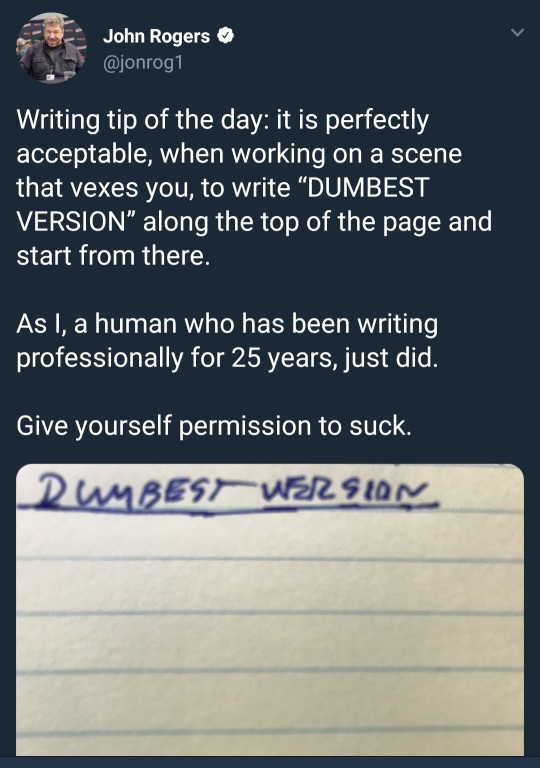
Friendly reminder to not punish yourself for creating.
Can you elaborate on what you mean by this?
I have a tendency to beat myself up whenever something I make doesn’t meet my expectations (which is always). The result is that finishing something = bad feelings: I am effectively punishing myself for having created something. The natural reaction to this punishment is an aversion to creation, meaning that my perfectionism is harming me, not only by causing me to despise what I do make and by impeding the creative process, but by attacking even my desire to create.
1. Art requires time — there’s a reason it’s called a studio practice. Contrary to popular belief, moving to Bushwick, Brooklyn, this summer does not make you an artist. If in order to do this you have to share a space with five roommates and wait on tables, you will probably not make much art. What worked for me was spending five years building a body of work in a city where it was cheapest for me to live, and that allowed me the precious time and space I needed after grad school.
2. Learn to write well and get into the habit of systematically applying for every grant you can find. If you don’t get it, keep applying. I lived from grant money for four years when I first graduated.
3. Nobody reads artist’s statements. Learn to tell an interesting story about your work that people can relate to on a personal level.
4. Not every project will survive. Purge regularly, destroying is intimately connected to creating. This will save you time.
5. Edit privately. As much as I believe in stumbling, I also think nobody else needs to watch you do it.
6. When people say your work is good do two things. First, don’t believe them. Second, ask them, “Why”? If they can convince you of why they think your work is good, accept the compliment. If they can’t convince you (and most people can’t) dismiss it as superficial and recognize that most bad consensus is made by people simply repeating that they “like” something.
7. Don’t ever feel like you have to give anything up in order to be an artist. I had babies and made art and traveled and still have a million things I’d like to do.
8. You don’t need a lot of friends or curators or patrons or a huge following, just a few that really believe in you.
9. Remind yourself to be gracious to everyone, whether they can help you or not. It will draw people to you over and over again and help build trust in professional relationships.
10. And lastly, when other things in life get tough, when you’re going through family troubles, when you’re heartbroken, when you’re frustrated with money problems, focus on your work. It has saved me through every single difficult thing I have ever had to do, like a scaffolding that goes far beyond any traditional notions of a career.



 love galore