So my therapist has been helping me get to grips with my ADHD, and also the concept that I’m not shit at being an adult, I just can’t do things the way everyone has always told me to do them. Like every single “organize your life” books have always left me wanting to cry with frustration, and after I got hold of a copy of Organizing Solutions for People with ADHD
by Susan Pinsky I realized that was because they primarily focus on “aesthetic” over “function”. And the function of most standard “organize your life books” is to “make things look Show Home Perfect”.
So the standard “hide all your unsightly things by doing xyz” may look nice for the first week or so, but by the end of the week it’ll look like a tornado made of pure inhuman frustration ripped through the house as I try to find the fucking advil.
To give you an example of the kind of hell I’ve been fumbling my way through the last 20 odd years: dishes will be washed and left in the drying wrack but never put away. Which means I can’t wash more dishes, which means dishes pile up, which means I can’t make food, which means I don’t eat, which means my CFS gets worse, which means I don’t have the energy to put the dishes away, and so on so forth until I have a meltdown, cry to ETD (who also likely has ADHD but has never had it confirmed) about how I can’t cope with life, and then we fix it for a while, but inevitably end up back at square one within about a week.
Pinsky’s solution to this was “remove an obstacle between you and your goal, if that means taking all the doors off your kitchen cabinets to make things easier, so be it.”
And lemme tell you, fucking revolutionary.
Laundry never ends up in the hamper??? why???? is it a closed hamper??? Remove the lid. Throw it out the window. Clothes are now miraculously finding their way into the hamper??? Rejoice????
Mail ends up spread out over every available flat surface? Put a sorting station right where your mail arrives. Put a shredder or “junk” basket under it. Shred or dump the junk immediately. Realize you only actually have two real letters that need attention, feel less overwhelmed, pay your bills on time.
Like I’m not saying this book is miraculous, but it did help me realize that I was effectively torturing myself by trying to conform to certain ideals of “perfect house keeping”, and presenting a certain image rather than just allowing myself to live in my space as effectively as possible. And why? Why was I doing that? Cause people with different lives and capabilities are perceived as the norm? Fuck that. If this was a physical problem I wouldn’t be forcing myself to conform to an ableist standard, so why am I doing it with this?
My lived space will never look a certain way, and that’s okay. It will never look show home perfect, and that’s okay. It will likely always be cluttered and eclectic where nothing matches, and that’s okay. Sometimes I will have odd socks on because sorting them out required too much mental energy, and that’s okay. Actually fuck sorting socks, just buy all your socks in the same color. Problem solved. Boring sure, but also one less thing to do, which means more time to hyper fixate on fun things. Which really, what else is my life for if not to write screeds and screeds of vampire shit posts, I ask you.
sometimes i think to myself “it’s entirely possible that i don’t have adhd at all” until i catch myself trying to listen to music and watch a video + read its comments at the same time
non-autistic authors write autistic characters all the time. they just don’t realize it. they’d rather not admit it most of the time, either.
the thing is, non-autistic people have met autistic people more than enough times. however, due to their stereotypes about autism, they often can’t identify it as autism. they see something is up, but they can’t put their finger on just what is up.
so they see people like us and they know the ‘archetype’ which is autistic people. they write us all the time: airheaded professors, awkward nerds, pent up geniuses, etc.
when autistic people point out how strikingly obvious it is that this character is autistic, they usually deny it, or at best, they say the character is ‘if anything, extremely high functioning’, which is more of a kick in the gut than a confirmation. we hardly get those, either.
so, here’s the thing: there are some characters that are very obviously autistic to actual autistic people. pearl from steven universe and papyrus from undertale are two of the most agreed upon examples that i’ve seen. nearly ever autistic fan of steven universe i met says, “yeah, she’s autistic”, and the same goes for papyrus.
when we, as a community, bring this up, however, we are shot down. “oh, he’s not autistic.” i once was told that – ironic as it was – my headcanoning papyrus as autistic offended autistic people or hurt autistic people. but i’m autistic and they weren’t.
two autistic people were both agreeing – damn, this character is blatantly autistic – but non-autistic people felt the need to but in and say how horrible it was to “project” onto characters with such a horrible thing.
listen, if you aren’t autistic and you’re reading this –
if an autistic person says a character is autistic, can you just shut up about it?
because if you’ve watched any amount of tv, read any amount of books, whatever – if you’ve consumed stories, there are tons of autistic characters in them.
just because neither you nor the media’s creators knows shit about autism doesn’t mean that the character can’t be autistic.
either way, it’s none of your business.
we have little to none confirmed representation that isn’t terrible and inconsiderately offensively written.
find something better to do with your time.
NT Author: *Writes lovingly nuanced character who is quirky, shy, physically sensitive, socially awkward, clumsy, brilliant at a few special topics and has the capacity to grow and learn friendship and love in a nontraditional way*
NT Author: They can’t possibly be autistic!
NT Author: I’m gonna write an autistic character!
NT Author: “Doesn’t talk, rocks back and forth, loves trains”
Gonna say this as an author:
It is 100% okay to use the phrase “well, they are now.”
If a ton of people approach you with a character you didn’t realize you coded autistic, and they’re like “fuck yeah, autistic character!”
You can 100% say “I didn’t even realize that’s what I was doing, but you know what? Sure. With the number of people who see it, I’m not gonna say no. They’re autistic now.”
Nobody worth having around is going to be offended by that.
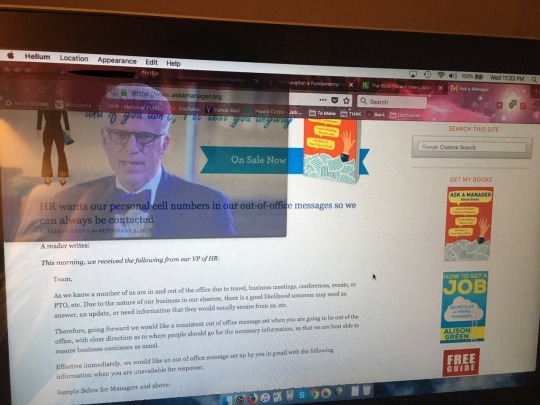
a mac app called helium that puts Netflix in a tiny floating window on your screen that you can make translucent and also click through, so you can watch tv and surf the web at the same time, it’s great
(That’s more see through than I like but this way it shows up in the picture)
This by no means a comprehensive list, it is simply a reference point, not a diagnostic tool. If you identify with a majority of this list and wish to receive a diagnosis, consult a medical professional, preferably a specialist in autism spectrum disorders who has had experience diagnosing women.
Tends to analyze everything constantly
Often straightforward and practical in nature.
Often gets lost in own thoughts and zones out (may display a blank stare)
May appear naive or innocent (despite not being so)
Prone to honesty, has difficulty lying
May struggle to understand manipulation, disloyalty, vindictive behavior and retaliation.
May be gullible and easily taken advantage of, misled, or conned.
May have feelings of confusion and isolation in relation to others
Escapism frequently used to relax or avoid overwhelming situations.
Often holds fixations, obsessions, and extreme interest in specific topics.
Finds comfort in escaping through imagination, fantasy, and daydreaming.
Often has slower reaction times due to need for mental processing.
May have had imaginary friends as a child.
Frequently imitates (takes social cues from) people on television or in movies.
May obsessively collect, organize, count, categorize, or rearrange objects.
Often highly adapted to social imitation.
May find math and numbers easier to deal with due to logic and lack of objective answers.
May struggle to relax or rest due to many racing thoughts.
Often has comorbid conditions, such as OCD, anxiety, ADD or ADHD, depression, bipolar disorder, etc.
Often has sensory processing disorder (sight, sound, texture, smells, taste)
May have dyspraxia (Poor muscle tone, lack of coordination and depth perception)
May have dyslexia
May have an eating disorder or food obsessions
May have been misdiagnosed or diagnosed with other mental illness or possibly labeled a hypochondriac.
Tends to drop small objects
May frequently engage in “stimming” (self-stimulation) i.e., flicks fingernails, flaps hands, drums fingers, rubs hands/fingers, tucks hands under or between legs, clenches fists, twirls hair, taps foot/shakes leg, sways side to side, spins in circles, bouncing up and down, rocking, etc.
May use various noises to express herself rather than using words.
May have a tendency to over-share with friends and sometimes strangers
May have little impulse control when speaking
May accidently dominate conversation at times.
Often relates discussion back to self (sharing as a means of reaching out)
May be incorrectly seen as narcissistic
Often sounds eager or over-zealous at times.
May feels as if she is attempting to communicate “correctly.”
Often struggles with and is confused by the unwritten social rules of accurate eye contact, tone of voice, proximity of body, stance, and posture in conversation.
Eye contact often takes extreme focus, which may lead an individual’s eye contact to be darting and insufficient, or over-the-top staring/glaring.
May have difficulty regulating voice volume to different situations. Is frequently observed as being either too loud or too quiet.
Conversation, specifically small talk, can be exhausting.
May have trouble focusing on/engaging in conversation that is not centered on one’s primary interests.
May observe and question the actions and behaviors of self and others continually.
May have difficulty with back-and-forth conversation
Trained self in social interactions through readings and studying of other people.
Visualizes and practices how she will act around others and before entering various social situations.
Difficulty filtering out background noise when talking to others.
Has a continuous dialogue in mind that tells her what to say and how to act when in a social situations.
Sense of humor sometimes seems quirky, odd, or different from others.
As a child, it may have been hard to know when it was her turn to talk, may still be true as an adult.
Often finds the norms of conversation confusing.
Tend to say what they mean. Are often brutally honest, coming off as rude when they do not mean to be.
May feel misunderstood and tend to over-explain/ramble in an attempt to compensate for possible miscommunication.
Feels extreme relief when she doesn’t have to go anywhere, talk to anyone, answer calls, or leave the house.
Feelings of dread about upcoming events and appointments on the calendar.
Knowing she has to leave the house causes anxiety from the moment she wakes up.
The steps involved in leaving the house are overwhelming and exhausting to think about.
Must prepare herself mentally for outings, excursions, meetings, and appointments.
Question next steps and movements continually.
Often needs a large amount of down time or alone time.
May feel extremely self-conscious and uncomfortable in public locker rooms, bathrooms, or dressing rooms.
Tends to dislike being in crowded areas.
Difficulty sleeping due to sensitivity to environment
May be highly intuitive to others’ feelings, although may not appear to react to them ‘correctly’ in social situations
May take criticism and judgement very personally
May frequently adapt her viewpoints or actions based on others’ opinions
Dislikes words and events that hurt animals and people.
May have had a desire to collect or rescue animals, usually in childhood.
Often holds great compassion for suffering.
May try to help, offer unsolicited advice, or formalize plans of action.
Imitates others without realizing.
May exhibit codependent behaviors.
May frequently reject or question social norms.
Chameleon-like in social situations. Often switches preferences and behaviours based on environment and other people.
May outwardly appear to have little investment in hygiene, clothes, or appearance, often prefers fast and easy methods of style.
Clothing style is likely more focused on comfort and practicality, especially in the case of sensory issues.
May possess a youthful appearance and/or voice.
May have trouble recognizing what she looks like and/or has slight prosopagnosia (difficulty recognizing or remembering faces).
The emotions of oneself and others may seem confusing, illogical, and unpredictable.
Expects that by acting a certain way certain results can be achieved, but realizes in dealing with emotions, those results don’t always manifest.
Often speaks frankly and literally.
Certain kinds of humor, such as sarcasm and metaphors, may be difficult to understand.
Can be confused when others ostracize, shun, belittle, trick, and betray.
Often has trouble identifying feelings in others unless they are extreme.
Trouble with the emotions of hate and dislike.
May have feelings of pity for someone who has persecuted/hurt her.
Situations and conversations sometimes perceived as black or white.
The middle spectrum of outcomes, events, and emotions is sometimes overlooked or misunderstood. (All or nothing mentality).
May notices patterns frequently.
May be fascinated by words or song lyrics.
Tends to best remember/learn things in visual pictures (visual thinkers).
May have a remarkable memory for certain details, i.e., may find it surprisingly easy to remembers exact details about someone’s life.
Executive function is often a challenge
Learning to ride a bike or drive a car may be rather difficult.
Anything that requires a reasonable amount of steps, dexterity, or know-how can rouse a sense of panic.
The thought of repairing, fixing, or locating something can cause anxiety.
May have a hard time finding certain objects in the house, but remembers with exact clarity where other objects are.
May frequently second-guess oneself and ask a lot of questions before engaging a task or situation
This list was compiled from various personal accounts and symptom lists. It is subjective and does not include every identifiable trait. Nor is it entirely medically accurate. Please do your own research into ASD before self-diagnosing.
When reblogging, feel free to add additional traits you believe to be common in ASD females that will be useful for others to know.



 love galore